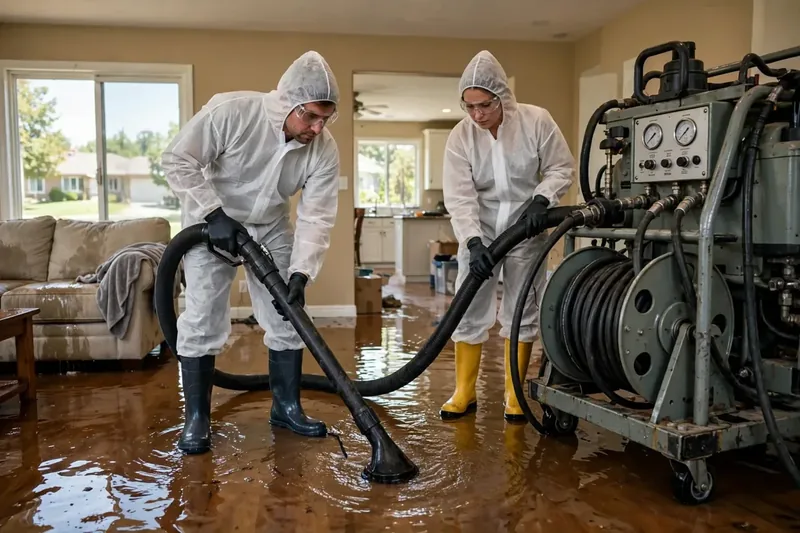
Water mitigation
the same-day work that stops damage from spreading: extraction, removing materials that can't be saved, and setting up drying.
Water on the floor, a stain spreading across the ceiling, a pipe that split overnight: the next few hours decide how much of your Plano home can be saved. We pull out the water, trace where it traveled with thermal cameras and moisture meters, and dry the structure until the readings prove it is dry, not just until it feels dry. Call now, and we'll walk you through shutting off the water while we head your way.
Serving Plano and nearby Collin County cities, day or night.
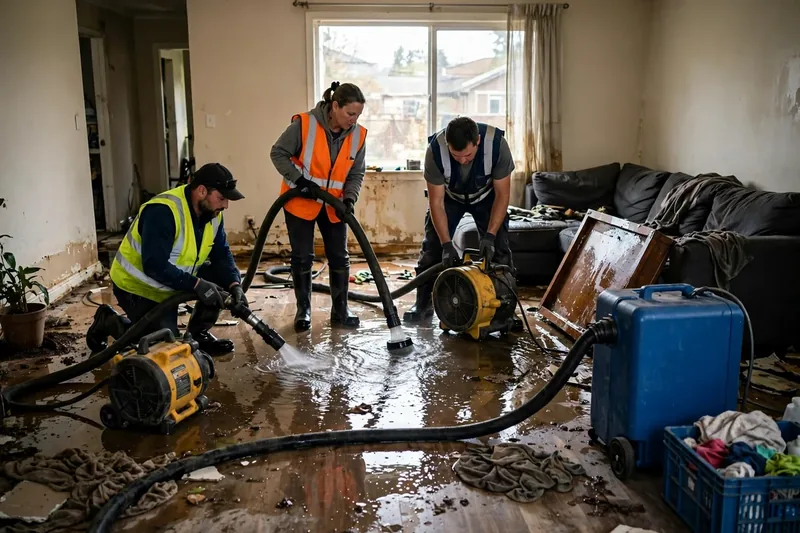
The first 30 minutes matter more than anything we do later. Work through these in order, and skip any step that feels unsafe.
Then call (972) 945-2118. We'll ask where the water came from, how long it ran and which rooms it reached, so we arrive with the right equipment instead of making a second trip.
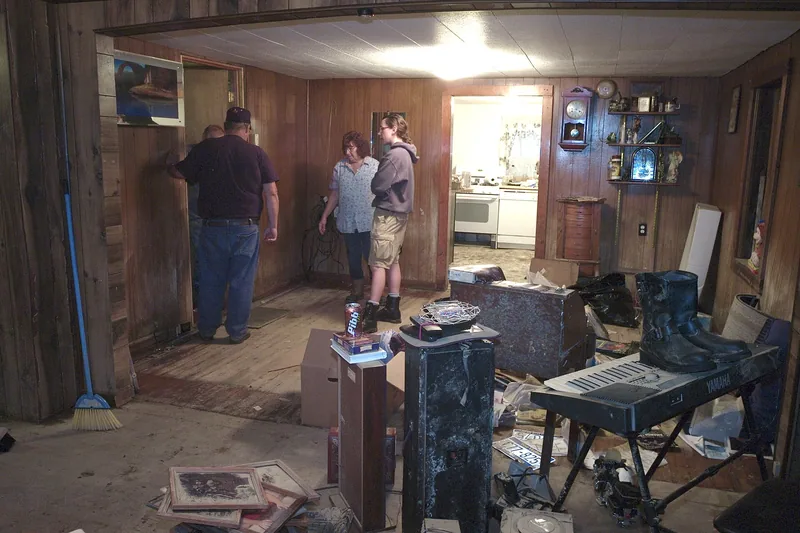
Every job follows the same order: confirm the source is stopped, measure how far the moisture spread, remove water, then dry what can be saved. What changes is where the water came from and what it soaked into.
the same-day work that stops damage from spreading: extraction, removing materials that can't be saved, and setting up drying.
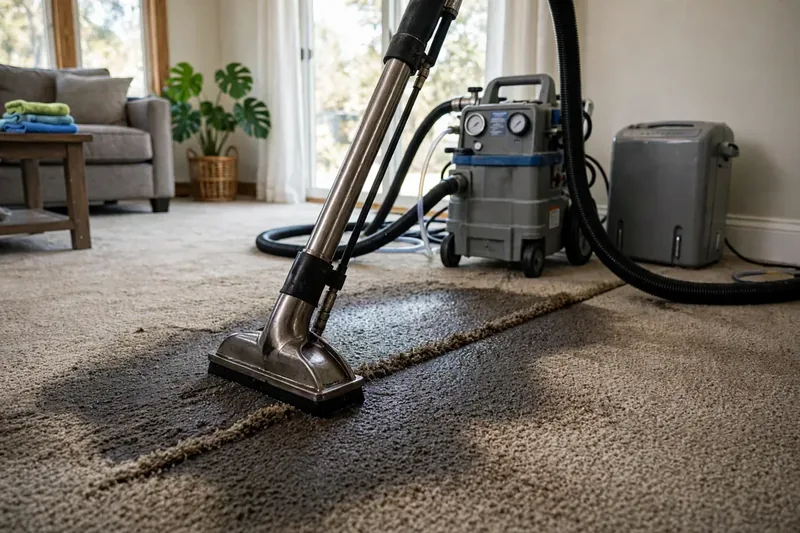
pulling standing water out of carpet, pad and hard floors. Water removed as liquid is far faster to deal with than water left to evaporate.
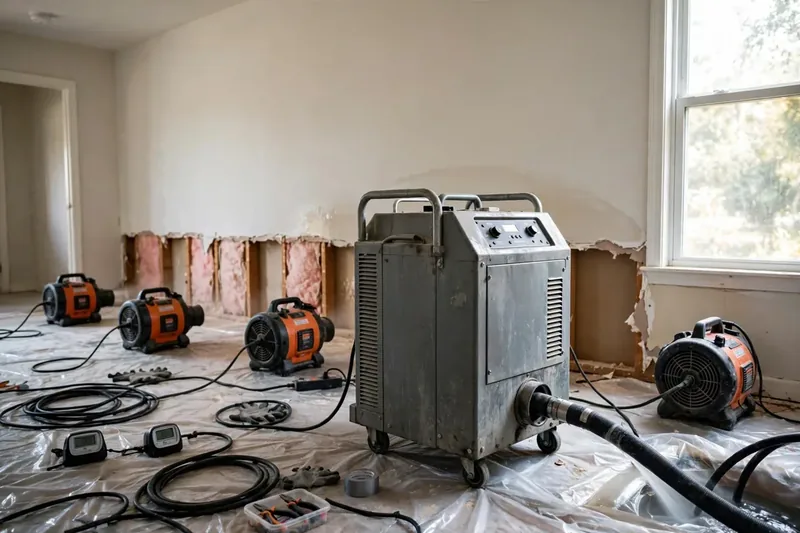
low-grain refrigerant (LGR) dehumidifiers and air movers, sized to each room, running until framing, drywall and subfloor return to normal moisture levels.

for pipes in exterior walls, attics and garages that split when North Texas drops below freezing.
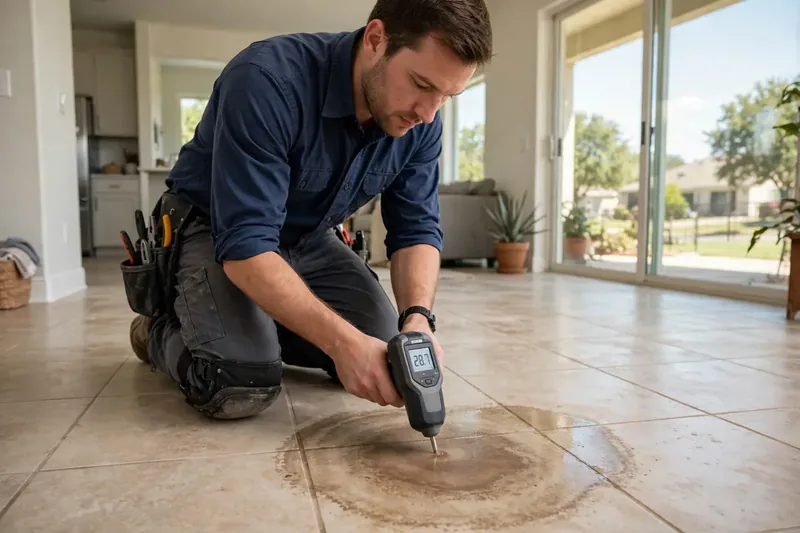
drying floors and walls after a leak under the foundation, once your plumber has found and fixed it.
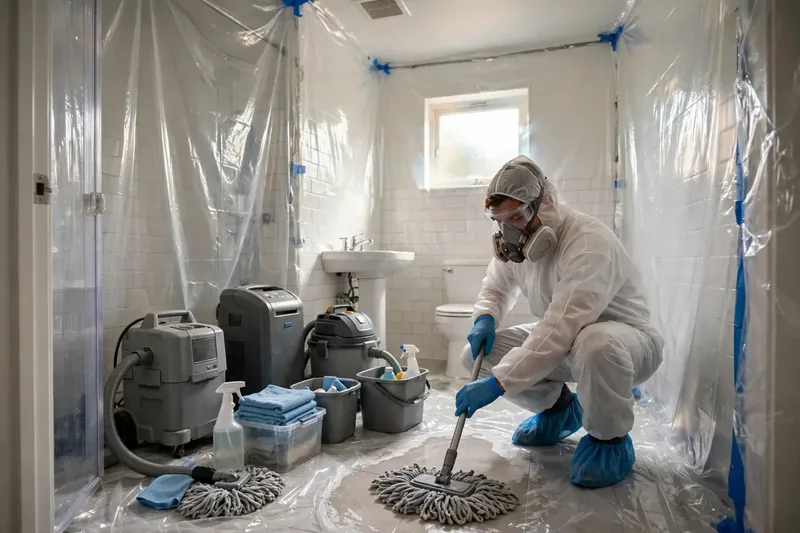
toilet overflows and sewer backups. Porous materials the water touched come out, and the area is cleaned and treated before drying.
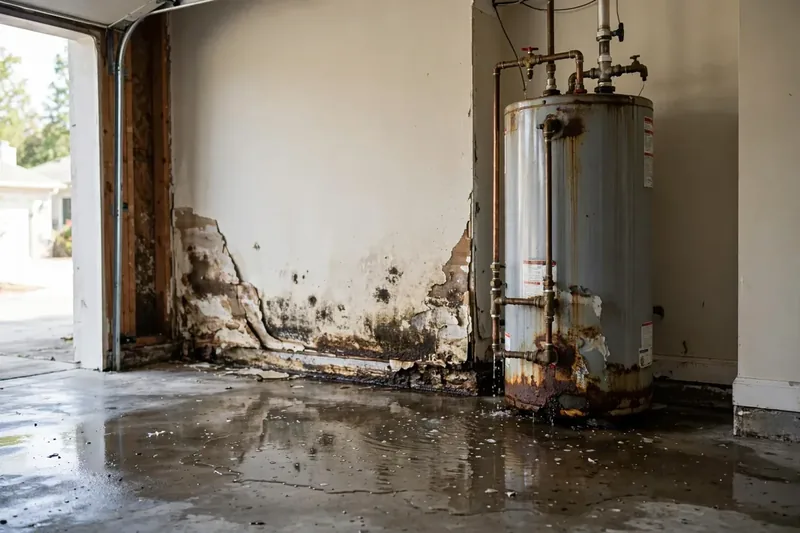
garage floors, laundry rooms and the walls beside a failed tank.
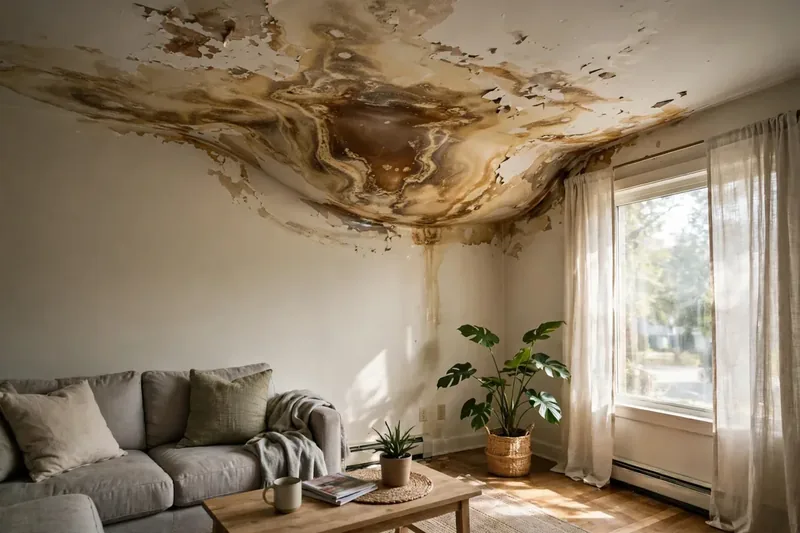
wet drywall, insulation and joists from roof leaks, upstairs bathrooms and attic equipment.
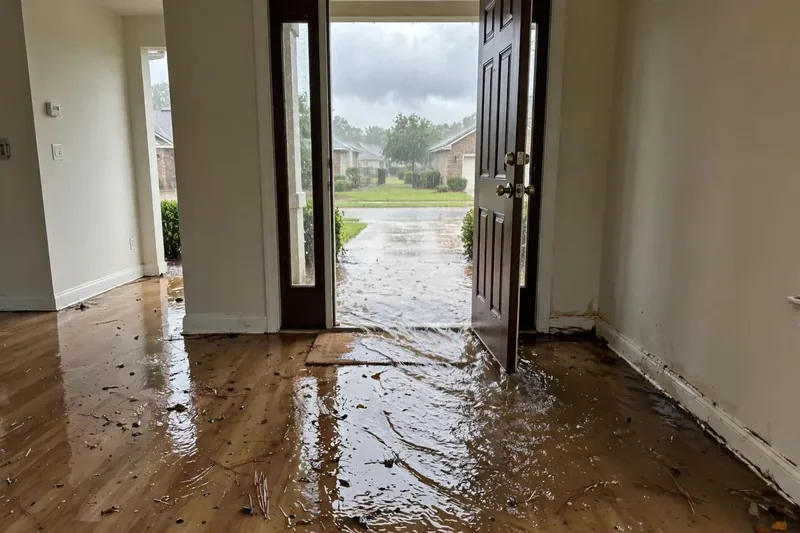
storm water that came in under doors or through slab edges.
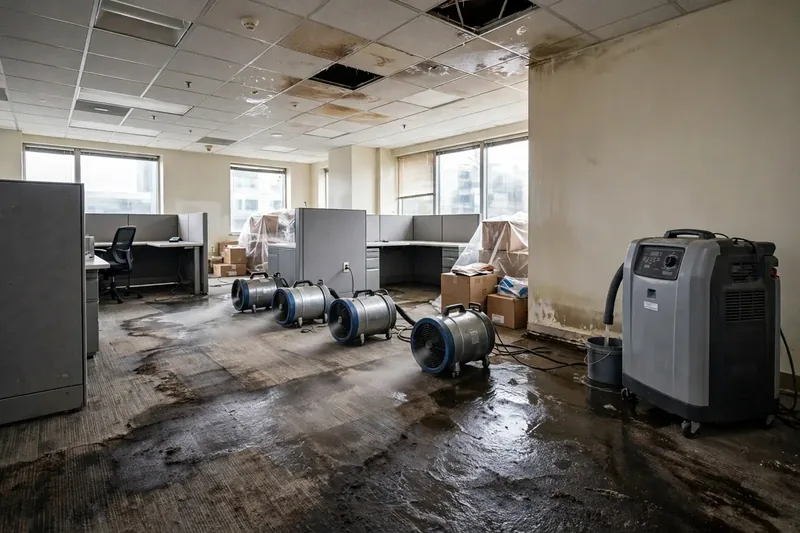
offices, retail, apartments and medical spaces, with drying planned around your hours.
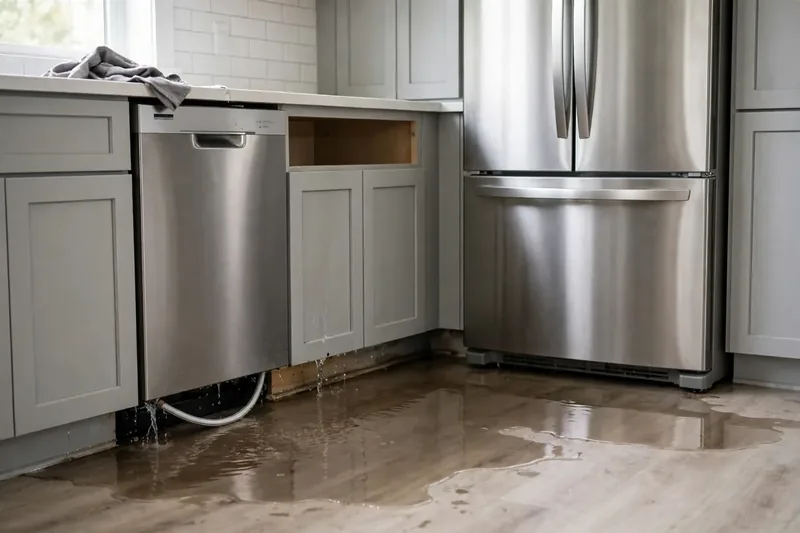
Slow leak under the fridge, dishwasher or sink? It may have spread under your floors for weeks. We find it, dry it and save what we can in Plano. (972) 945-2118
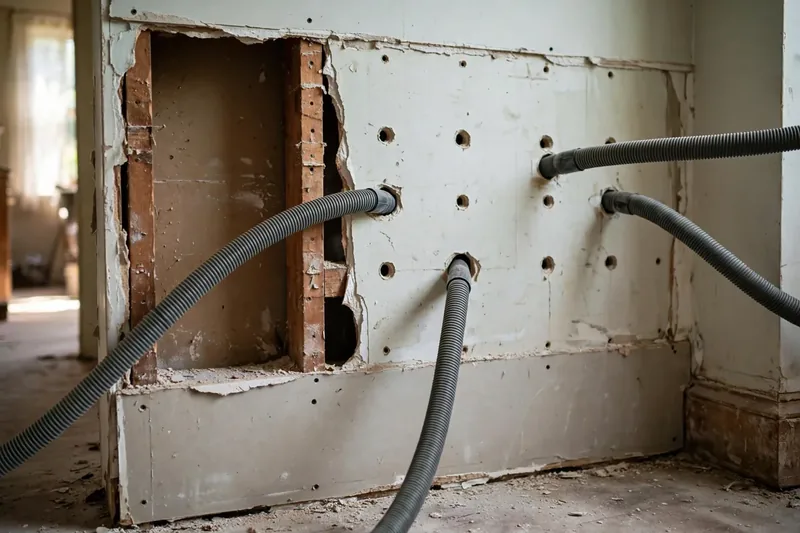
Wet drywall after a leak? Many walls can be dried in place through small holes behind the baseboard instead of torn out. Plano wet wall drying: (972) 945-2118
Many calls don't start with "my house flooded." They start with a stain, a smell or a floor that began to lift. These are the problems we see most often in Plano homes:
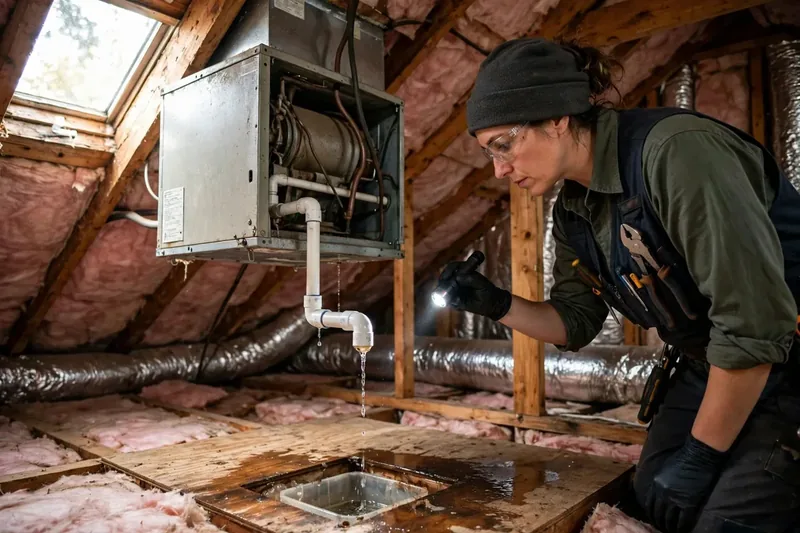
a clogged condensate line or rusted drain pan on the attic air handler, most common from June to September.
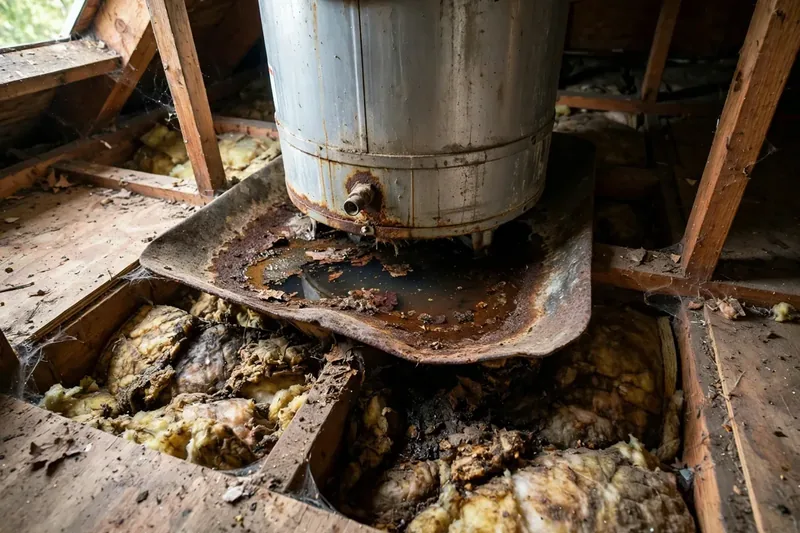
the tank fails, the pan overflows, and water runs through insulation into the room below.
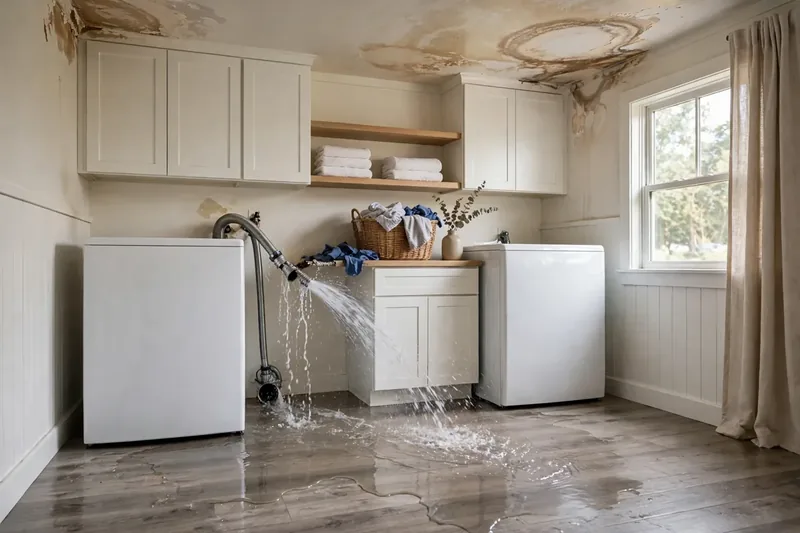
a burst washer hose on the second floor soaks the subfloor and the ceiling beneath it.
slow supply-line drips that spread under cabinets and flooring for weeks before anyone notices.
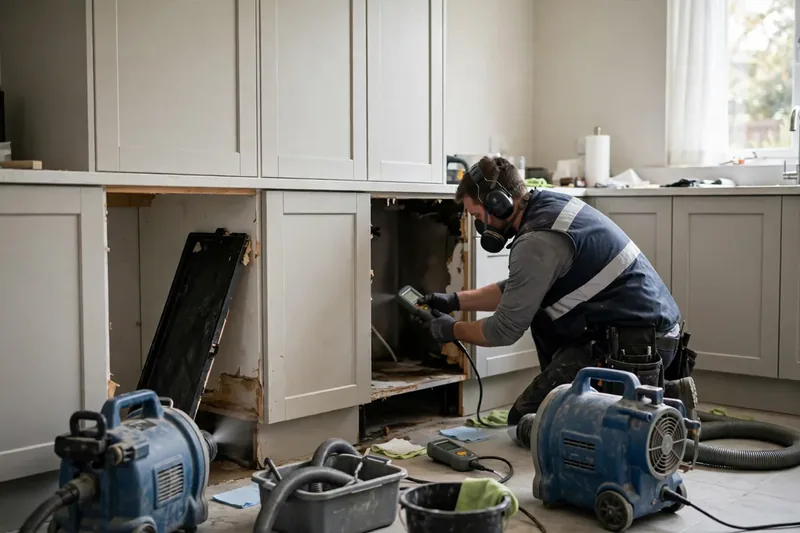
often we can dry behind toe-kicks and inside cabinet bases without pulling the cabinets or countertops.
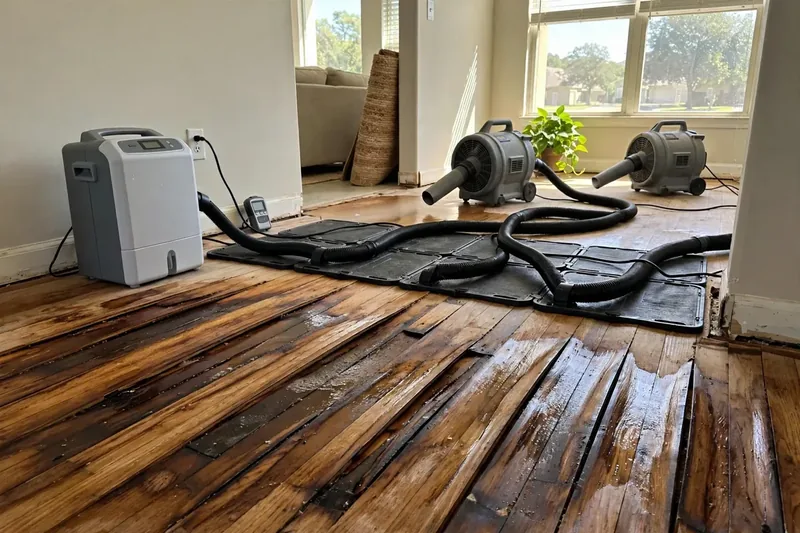
drying mats draw moisture out of boards and subfloor; caught early, many floors flatten back.
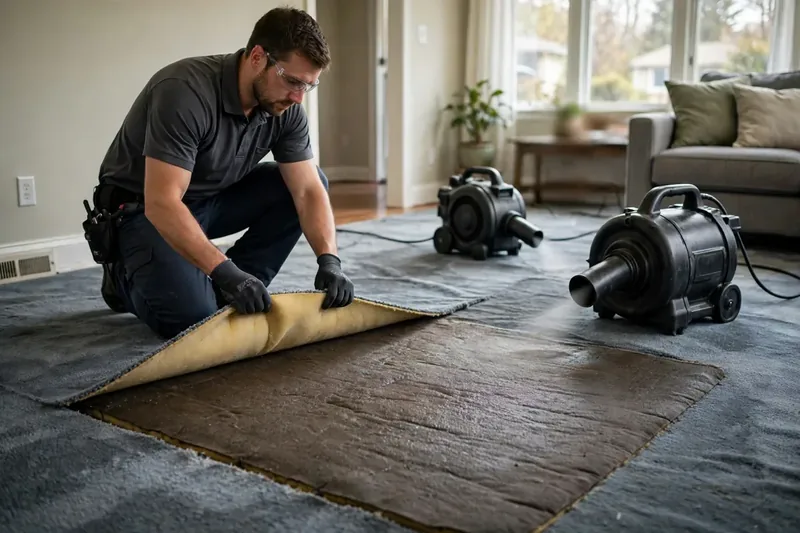
whether carpet and pad can be saved depends on how clean the water was and how long it sat.
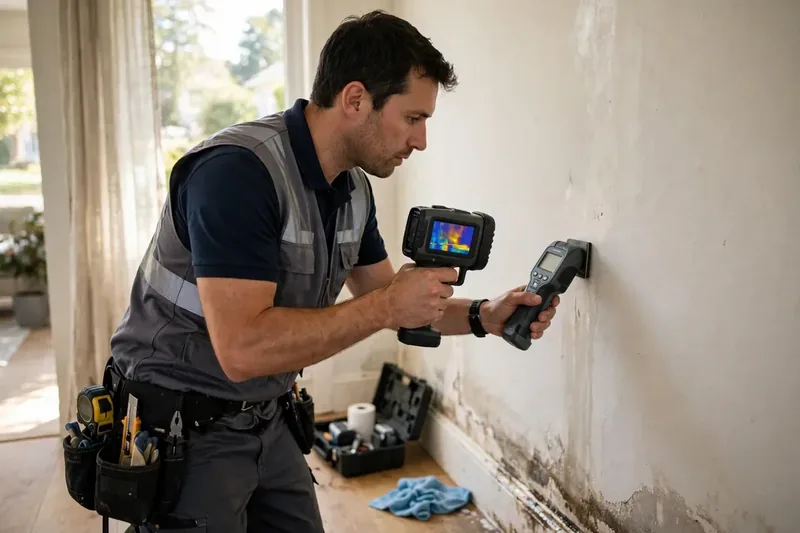
thermal imaging plus meter readings to find hidden water in walls, floors and ceilings without opening them up.
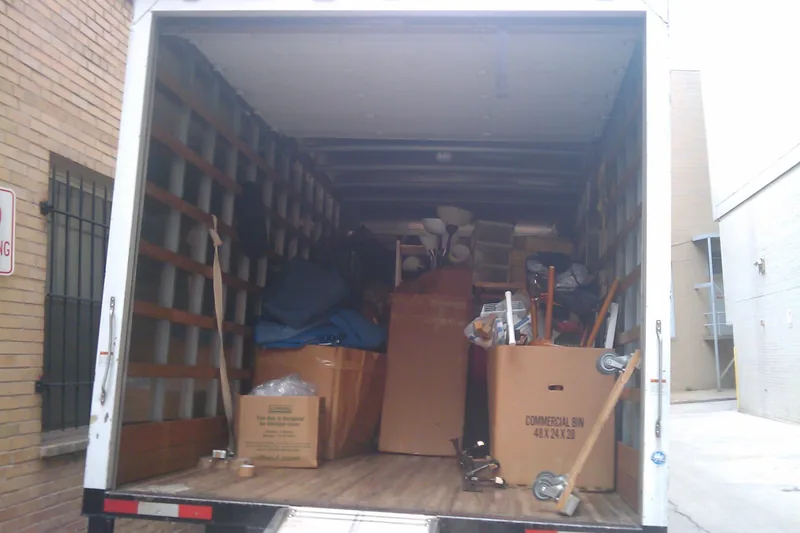
we inventory, pack and move belongings out of wet rooms so the structure can dry and your things aren't sitting in humid air.
Plano's soil, its weather and the way its houses were built create a specific set of water problems. Knowing which one you're dealing with tells us where hidden moisture is likely to be.
Plano sits on Blackland Prairie clay that swells after spring rain and shrinks hard through dry summers. Nearly every home here is built on a concrete slab, and that constant movement strains the copper supply lines beneath it, especially in homes built from the 1980s through the early 2000s. A pinhole leak under the slab can soak flooring for weeks before it shows. Watch for a warm spot on the floor, damp carpet with no visible source, tile that sounds hollow or lifts, or a water bill that jumped for no reason.
North Texas homes aren't built for long freezes. Supply lines run through exterior walls, attics and garages with little insulation. During Winter Storm Uri in February 2021, about 50,000 Plano homes lost power at the peak, and burst pipes flooded houses across the city once temperatures climbed. The worst damage often appears after the thaw, when water flows again through a pipe that cracked while it was frozen. Our Plano winter freeze checklist covers what to do before the next cold snap.
Collin County sits in one of the most active hail corridors in the country. In 2025 there were 21 hail reports within 10 miles of Plano, with stones up to 2.25 inches. Cracked shingles and lifted flashing let wind-driven rain into the attic, where it soaks insulation and settles on the ceiling drywall below. The stain you can see is usually a fraction of the wet area above it.
Many two-story homes in Central and West Plano put the water heater, the air handler or both in the attic. That keeps them out of the living space, until a drain pan rusts through, a condensate line clogs with algae, or an aging tank finally fails. Then the water has one way to go: down through the insulation and into the rooms below.
Homes around Downtown Plano and across 75074 are among the oldest in the city. Cast iron drain lines, mature tree roots and older fittings make sewage backups and slow leaks more likely here than in newer subdivisions. A few pockets near Haggard Park sit on pier-and-beam foundations, where water collects in the crawl space instead of spreading across a slab.
Drying isn't leaving fans running and hoping. It's measuring moisture, removing as much water as possible as liquid, and controlling the air until materials return to their normal levels. A typical job runs like this:
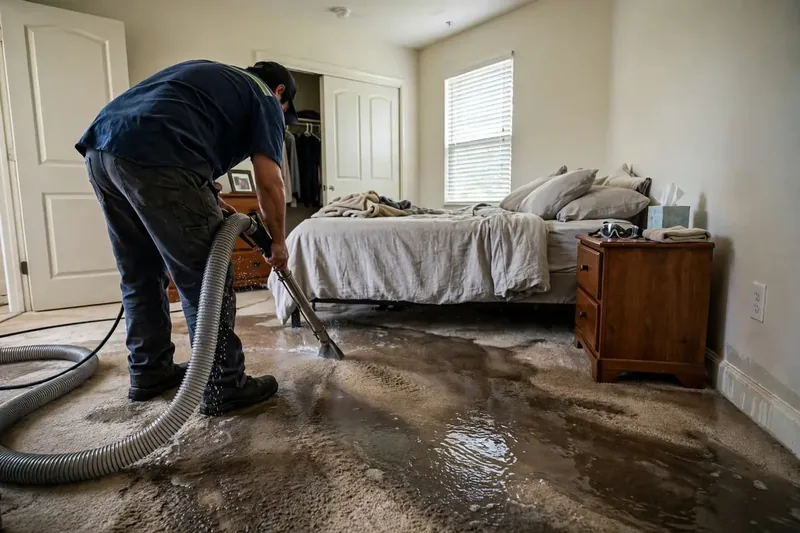
Water damage is sorted two ways: how contaminated the water is (category) and how much material soaked it up (class). Together they decide what can be dried in place and what has to come out.
| Category | Typical Plano source | What it means for your home |
|---|---|---|
| Category 1 (clean) | Burst supply pipe, ice maker line, water heater supply | Most materials can be dried in place if work starts quickly |
| Category 2 (gray) | Washer or dishwasher discharge, AC condensate, clean water left 48+ hours | Carpet pad usually removed; surfaces cleaned before drying |
| Category 3 (black) | Sewer backup, toilet overflow with waste, storm water from outside | Porous materials removed; area cleaned and treated |
| Class | What got wet | Drying effort |
|---|---|---|
| Class 1 | Part of one room, little absorbed | Light |
| Class 2 | A whole room: carpet, pad, walls up to about 24 inches | Moderate |
| Class 3 | Ceilings, walls, insulation and subfloor, often water from above | Heavy |
| Class 4 | Hardwood, concrete, plaster or stone | Specialty drying, longer time |
Clean water doesn't stay clean. In Texas heat and humidity, water that sits a day or two picks up bacteria from carpet, drywall and the slab. That's why speed changes both the category of the job and what it costs.
You get a written estimate before any work beyond emergency extraction. The price comes down to factors you can usually see on the first visit:
For typical ranges and what pushes a job up or down, read our guide to water damage restoration cost in Plano.
We don't adjust or negotiate claims; that stays between you and your insurer. What we do is document the loss the way adjusters need to see it:
Most Texas homeowners policies treat sudden and accidental water, like a burst pipe or a failed water heater, differently from gradual leaks, and differently again from flood water, which usually needs separate flood coverage. Our guide to sudden vs. gradual water damage in Texas explains where the lines usually fall. Policies also expect you to take reasonable steps to prevent further damage, one more reason to start drying quickly. The Texas Department of Insurance publishes consumer guides if you want to check your rights.
A leak in an office tower along Legacy Drive, a frozen sprinkler line in a retail space, or a unit-to-unit leak in an apartment building has to be dried around tenants and business hours. We contain the wet area, keep equipment noise and foot traffic manageable, and document everything for owners and property managers. See commercial water damage restoration in Plano for offices, retail, multifamily and medical properties.
We work across all of Plano, from the Collin County side to the far-west pocket in Denton County, and in the cities along its borders. Each part of town has its own housing and its own common calls:

Haggard Park, Old Towne and Los Rios. Older homes, cast iron drains and some pier-and-beam foundations.
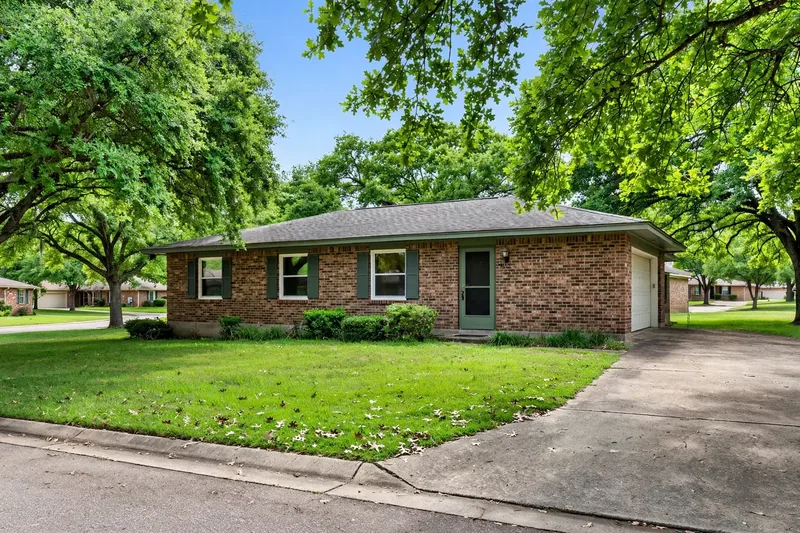
1970s to 1990s homes around Coit, Custer and Parker Road, where slab leaks and attic water heaters are frequent.

larger two-story homes with hardwood, custom cabinetry and multiple attic AC units.

heavy hail in recent seasons and newer two-story homes with upstairs laundry rooms.
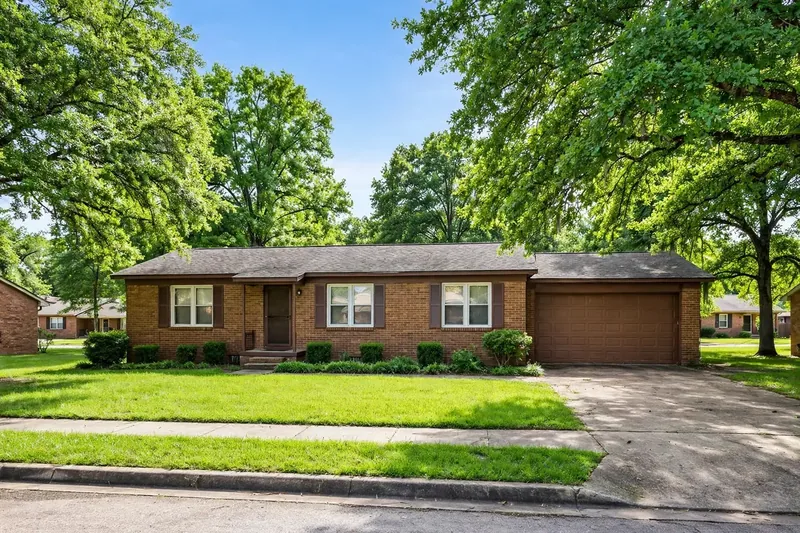
older neighborhoods with aging drain lines, plus the office buildings of the Telecom Corridor.
We also cover North Plano (75025), Legacy West (75024), Frisco, McKinney, Murphy, Wylie, Sachse and Parker. Not sure we reach your street? Call and ask.
Start within 24 to 48 hours. After that, drywall and wood begin to break down, carpet pad starts to smell, and conditions for mold growth build quickly in North Texas humidity.
A small spill on tile or vinyl, yes. Once water reaches carpet pad, the bottom of drywall or the subfloor, household fans dry the surface while moisture stays trapped underneath. Without meter readings, there's no way to know when it's actually dry.
Stop the water, take photos, then call both. Your policy expects you to prevent further damage, and starting extraction quickly is part of that. We'll document everything for your claim.
Usually, if the water was clean, power to wet rooms is off and no ceiling is sagging. Sewage, water near the electrical panel or a bulging ceiling are reasons to keep everyone out of those rooms until they're handled.
Not always. If drying starts early, floor mats can pull moisture from the wood and subfloor, and many floors flatten back. Boards still cupped after drying, or that sat in dirty water, usually need replacing.
Most clean-water jobs take 3 to 5 days. Hardwood, concrete and plaster can take a week or more. Equipment leaves when the readings say the materials are dry, not before.
A hidden leak inside a wall, under a cabinet or below the slab is a common cause. Thermal imaging and moisture meters can usually find it without opening walls.
Our focus is mitigation: removing water and drying the structure. When drying is done, you get a full record of what was removed, so your contractor can rebuild from an accurate scope.
Every hour water sits, it reaches further into drywall, wood and slab. Call (972) 945-2118, tell us what you're seeing, and we'll walk you through the first steps while we get moving.